PaperReading
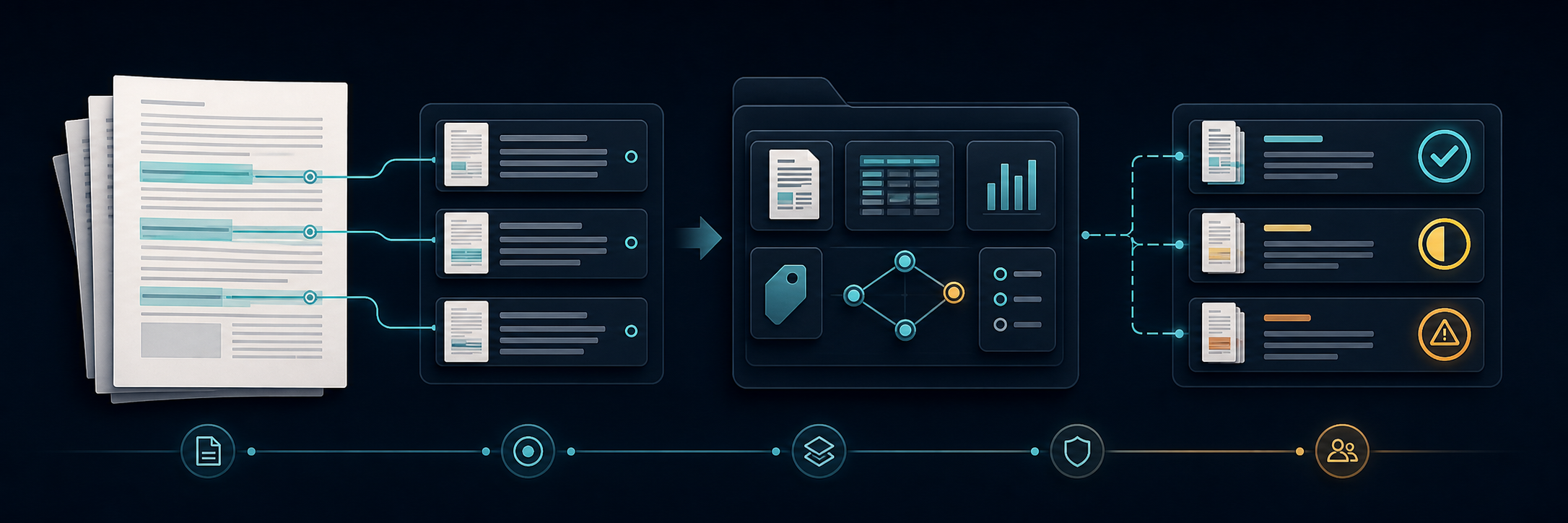
Evidence-grounded AI research workflow
Turn research material into versioned, reviewable artifacts.
Trace claims to evidence. Separate reporting from analysis. Keep uncertainty visible.




English · 简体中文
Quick start · Capabilities · Architecture · Research principles · Roadmap · Contribute
PaperReading is an alpha-stage Python core and Codex Skill for researchers and research-tool builders who need more than a fluent summary. Its schemas and validators preserve the chain from a source location to a claim, distinguish paper-reported content from later interpretation, guard causal language, and keep legacy research exports reviewable.
[!IMPORTANT] Current scope: v0.3.1 ingests UTF-8 text, Markdown, and text-based PDFs; replays staged extraction through an auditable JSON provider; enforces Draft → Review → Finalize; and verifies quotations with local fuzzy alignment. PDF support does not provide OCR, layout geometry, table reconstruction, or figure extraction. Hosted AI providers, batch jobs, SQLite search, cross-paper synthesis, and automatic gap discovery remain planned.
From fluent summaries to defensible research artifacts
| Research requirement | PaperReading rule |
|---|---|
| Traceability | Claims reference de-duplicated evidence spans with source and locator metadata |
| Epistemic separation | Paper-reported content and researcher or AI-assisted analysis live in different objects |
| Inference discipline | Causal wording requires an eligible design and an explicit identification strategy |
| Explicit uncertainty | Verification returns verified, partial, or failed; migration never implies source checking |
| Reproducibility | Versioned schemas, run metadata, deterministic migrations, and inspectable local files preserve provenance |
| Compatibility | JSON, Markdown, legacy 13-field projection, and safe Excel append share one validated domain model |
These rules make five questions answerable: what the paper reported, where the supporting evidence lives, whether that locator was checked, what the design permits us to infer, and how the artifact changed over time.
Try it in 60 seconds
Clone the repository, install the Core package, and validate the checked-in research package:
git clone https://github.com/AOROM/paperreading.git
cd paperreading
python -m pip install -e .
paperreading validate examples/paper-package.example.json
The fixture returns valid: true, evidence_count: 4, and finding_count: 1. It also returns four explicit EVIDENCE_NOT_VERIFIED warnings because the example was migrated from v0.2 and has not been checked against source content. That visible limitation is part of the contract, not hidden noise.
| If you want to… | Start here |
|---|---|
| Evaluate the artifact model | examples/paper-package.example.json and versioned schemas |
| Use the Codex workflow | skills/papers-reading-skill |
| Integrate from Python | Python API |
| Preserve an Excel workflow | Safe Excel compatibility |
| Understand research safeguards | Research Principles |
| Help shape the project | Roadmap and contribution guide |
What ships in v0.3.1
| Capability | Status | Public contract |
|---|---|---|
| v0.3 research package | Implemented | PaperPackage separates document, grounded record, normalized evidence, analysis, audit, and run metadata |
| Source-aware ingestion | Implemented | Deterministic UTF-8 text/Markdown plus optional text-based PDF parsing behind one DocumentParser port |
| Extraction lifecycle | Implemented | Provider-neutral staged extraction, candidate/conflict preservation, explicit human review, and guarded finalization |
| Offline JSON provider | Implemented | Replays inspectable candidate and evidence output without a network call or hidden model dependency |
| Evidence graph | Implemented | Research objects reference de-duplicated EvidenceSpan nodes by stable ID |
| Evidence verification v2 | Implemented | Source, page, block, section, text-hash, and local-window fuzzy quotation checks with explicit states |
| v0.2 migration | Implemented | Deterministic PaperRecord → PaperPackage migration with visible provenance limitations |
| Analysis separation | Implemented | Researcher assessments and extensions live outside the source-grounded record |
| Causal-language guard | Implemented | Causal wording requires an eligible design and an explicit identification strategy |
| Export and compatibility | Implemented | Lossless JSON, reviewable Markdown, legacy 13-field projection, and safe Excel append |
| Local project storage | Implemented | Atomic, inspectable JSON files under .paperreading/; no database required |
| OCR / hosted LLM / PDF geometry / batch / search / synthesis | Planned | Sequenced in the roadmap and never presented as shipped |
How it works
flowchart LR
    S["Text / Markdown / text-based PDF"] --> I["Parser adapters"]
    I --> D["PaperDocument"]
    D --> E["Staged provider extraction"]
    E --> R["PaperDraft: candidates + conflicts"]
    R --> H["Explicit human review"]
    H --> P["Finalized PaperPackage"]
    V2["v0.2 PaperRecord"] --> M["Deterministic migration"]
    M --> P["v0.3 PaperPackage"]
    D --> V["Evidence verifier"]
    P --> V
    V --> O{"Validated artifact"}
    O --> J["JSON"]
    O --> MD["Markdown"]
    O --> L["Legacy 13-field projection"]
    L --> X["Safe Excel exporter"]
The dependency direction is deliberate:
domain <- migrations / ingestion / verification / validation / projections
       <- application use cases <- CLI / Skill / exporters / repositories
The domain layer imports no Typer, OpenPyXL, model SDK, storage adapter, or Codex runtime. File storage and Excel are replaceable adapters; the schemas remain the center of the system.
Research constitution
The normative Research Principles derive project decisions from academic validity, traceability, falsifiability, reproducibility, and research ethics. They take precedence over compatibility, convenience, performance, and growth metrics. A capability that cannot state its research object, evidence, inference boundary, uncertainty, and failure behavior is not ready to ship.
Explore the command workflow
Install optional PDF and Excel adapters only when they are needed:
python -m pip install -e ".[pdf,excel]"
Initialize an inspectable local project:
paperreading init
This creates .paperreading/config.toml, a manifest, and separate directories for documents, drafts, records, analyses, audits, and cache data.
Exercise the source-ingestion contract with the synthetic Markdown fixture:
paperreading ingest examples/source.example.md
Run the complete, network-free Draft → Review → Finalize fixture:
paperreading ingest examples/source.example.md --output document.json
paperreading extract document.json \
  --provider-manifest examples/extraction-manifest.example.json \
  --output bundle.json
paperreading review bundle.json \
  --decisions examples/review-decisions.example.json \
  --output reviewed.json
paperreading finalize reviewed.json \
  --document document.json \
  --output package.json
paperreading verify package.json --document document.json --strict
paperreading read combines ingestion and extraction when a project repository is desired. The JSON provider is a deterministic replay adapter for evaluation and integration; it is not a hosted LLM. A future model adapter must implement the same provider contract and preserve candidate evidence, uncertainty, and run metadata.
Exercise deterministic v0.2 migration without mutating the project:
paperreading migrate examples/paper-record.example.json \
  --output paper-package.json
Validate, export, and project either version:
paperreading validate examples/paper-record.example.json
paperreading validate examples/paper-package.example.json
paperreading export examples/paper-package.example.json review.md --format markdown
paperreading project examples/paper-package.example.json
Verify a package whose evidence IDs reference an ingested document:
paperreading verify package.json \
  --document .paperreading/documents/<document-id>.json \
  --strict \
  --output verified-package.json
The extraction fixture is linked to the synthetic Markdown source and can be strictly verified end to end. It contains invented, non-citable material. Extracting an arbitrary paper still requires a compatible provider; PaperReading does not silently make a model call or claim OCR capability.
The v0.3 artifact model
PaperPackage
├── document: DocumentManifest
├── record: GroundedPaperRecord
│   ├── metadata / questions / theory / data / variables / design
│   ├── source_claims -> evidence_ids[]
│   ├── findings / mechanisms / heterogeneity / robustness -> evidence_ids[]
│   └── paper-reported limitations
├── evidence_index: {evidence_id -> EvidenceSpan}
├── analysis
│   ├── researcher or AI-assisted assessments
│   └── executable research extensions
├── audit: optional method-audit report
└── run: reproducibility metadata
GroundedPaperRecord contains source-derived information. ResearchAnalysis contains interpretation and proposed extensions. Keeping them separate prevents a generated idea from being mistaken for a paper finding.
An evidence span can include both logical and physical locators:
{
  "evidence_id": "ev-0123456789abcdef",
  "source_id": "src-0123456789abcdef",
  "type": "TEXT",
  "page": 1,
  "section_path": ["Results"],
  "block_id": "p1-b0007",
  "char_start": 420,
  "char_end": 581,
  "quoted_text": "A source quotation used for verification."
}
The traceability score measures locator specificity. It is not a truth probability, study-quality score, causal-validity score, or external-validity judgment. Verification checks whether the locator and quotation resolve against the supplied PaperDocument; it still cannot establish that the paper's methods or claims are correct.
Schemas and compatibility
The root schema names remain convenient stable aliases. Immutable versioned contracts live under schemas/v0.2 and schemas/v0.3.
| Input | Validate | JSON/Markdown | Legacy projection | Safe Excel |
|---|---|---|---|---|
v0.2 PaperRecord | Yes | Yes | Yes | Yes |
v0.3 PaperPackage | Yes | Yes | Yes, when research extensions exist | Yes, through the same projection |
Migration preserves the v0.2 13-field projection exactly. It does not pretend that legacy evidence has been checked against source content; migrated packages remain visibly marked migrated until verification runs.
Python API
from datetime import datetime, timezone
from pathlib import Path

from paperreading import (
    PaperRecord,
    migrate_v02_to_v03,
    to_legacy_13_fields,
    validate_package,
)

record = PaperRecord.model_validate_json(
    Path("record.json").read_text(encoding="utf-8")
)
package = migrate_v02_to_v03(
    record,
    migrated_at=datetime.now(timezone.utc),
)
report = validate_package(package)

if report.valid:
    legacy_row = to_legacy_13_fields(package)
Safe Excel compatibility
paperreading export package.json literature.xlsx --format excel --sheet 中文
The workbook must already contain 中文 and 英文 worksheets. The exporter:
- validates the 12- or 13-column header contract;
- detects duplicates without overwriting them;
- preserves existing values, formulas, styles, tables, filters, and frozen panes;
- creates a timestamped backup;
- writes and reopens a temporary file for validation; and
- replaces the source workbook atomically only after validation succeeds.
The legacy skills/papers-reading-skill/scripts/append_paper_reading.py entry point remains available for existing 13-field JSON integrations. No personal workbook path is committed; PAPER_READING_WORKBOOK may supply an existing local configuration.
Codex Skill
Copy skills/papers-reading-skill into the Codex skills directory after installing the Core package, start a new session, and invoke $papers-reading-skill. The standalone Skill directory carries the same MIT license notice.
The Skill is an adapter, not a second implementation. It respects the supplied source boundary, constructs a source-grounded package or compatible v0.2 record, runs Core validation, reports uncertainty, and requests authorization before workbook mutation.
Documentation map
| Document | Purpose |
|---|---|
| Research Principles | Normative rules for validity, evidence, inference, uncertainty, reproducibility, and ethics |
| Architecture | Parser and provider ports, artifact lifecycle, identity rules, and finalization gates |
| Roadmap | Shipped boundaries, planned hypotheses, milestones, and release gates |
| Contribution guide | Architecture, schema evolution, compatibility, testing, and research-integrity checks |
| Security policy | Private vulnerability-reporting guidance and supported-version policy |
| Changelog | Versioned record of public capability and compatibility changes |
| MIT License | Permission to use, copy, modify, distribute, sublicense, and sell the project |
Project structure
paperreading/
├── LICENSE                 # OSI-approved MIT open-source license
├── RESEARCH_PRINCIPLES*.md # Bilingual academic-research contract
├── docs/assets/            # Repository presentation assets and provenance
├── src/paperreading/
│   ├── domain/          # v0.2 and v0.3 strict models
│   ├── ingestion/       # text, Markdown, and optional text-based PDF parsers
│   ├── providers/       # extraction protocol and offline JSON adapter
│   ├── migrations/      # version-to-version transformations
│   ├── verification/    # source-content evidence checks
│   ├── validation/      # evidence-state and causal-language rules
│   ├── application/     # reusable use cases
│   ├── repositories/    # local atomic JSON adapter
│   ├── projections/     # legacy 13-field projection
│   └── exporters/       # JSON, Markdown, and Excel adapters
├── schemas/             # root aliases and versioned JSON Schemas
├── skills/              # Codex adapter
├── examples/            # synthetic, non-citable fixtures
├── tests/               # domain, CLI, migration, verifier, and Excel safety tests
└── tools/               # deterministic schema, example, and Skill checks
Development
python -m pip install -e ".[excel,pdf,dev]"
python -m ruff check .
python -m ruff format --check .
python -m mypy
python tools/export_schemas.py --check
python tools/generate_examples.py --check
python tools/validate_skill.py skills/papers-reading-skill
python tools/validate_license.py
python -m unittest discover -s tests -v
python -m pip wheel --no-deps --wheel-dir dist .
python tools/validate_license.py --wheel-dir dist
If this direction is useful to your research workflow, consider starring the repository, opening an issue with a reproducible case, or contributing through CONTRIBUTING.md.
License
PaperReading is open-source software released under the MIT License. Unless a file states otherwise, the license covers the repository's source code, schemas, synthetic examples, documentation, and presentation assets.
The MIT License does not grant rights to third-party papers, datasets, user-supplied inputs, or generated extracts. Those materials remain subject to their own copyright, privacy, confidentiality, consent, and redistribution terms.