
OpenSRE — the memory-first AI SRE
Self-hosted · Episodic memory · Knowledge graph · Web console · Slack & Teams
opensre.in — not affiliated with Tracer / opensre.com





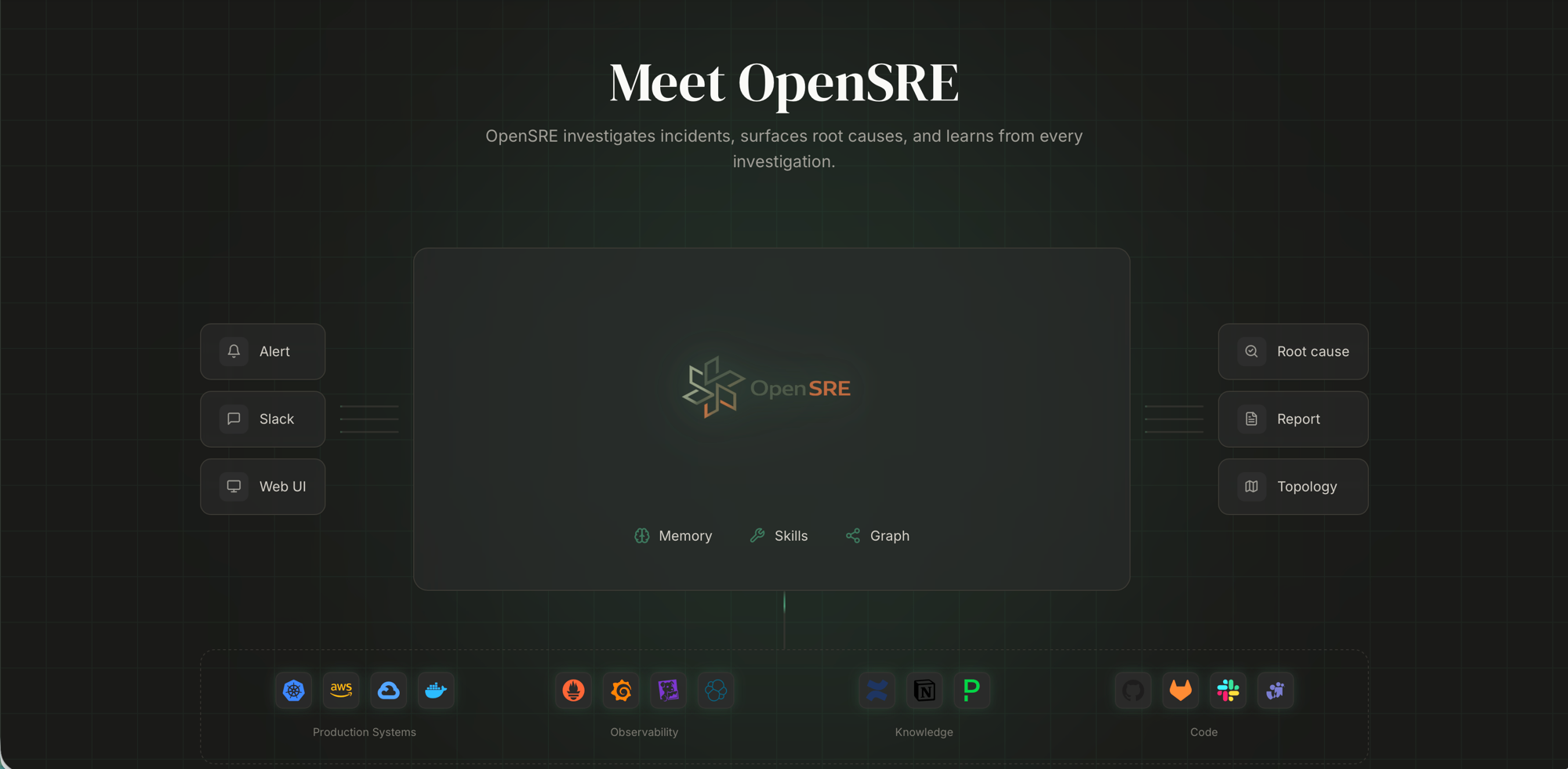
OpenSRE is an open-source AI SRE agent that automatically investigates production incidents, finds root causes, and learns from every investigation. It combines episodic memory (remembering past incidents and what fixed them) with a Neo4j knowledge graph (understanding service dependencies and blast radius) and 51 production-ready skills for tools like Datadog, Grafana, PagerDuty, Elasticsearch, Kubernetes, and AWS. Self-hosted, direct Anthropic by default (provider-agnostic via the optional LiteLLM proxy), and licensed Apache 2.0.
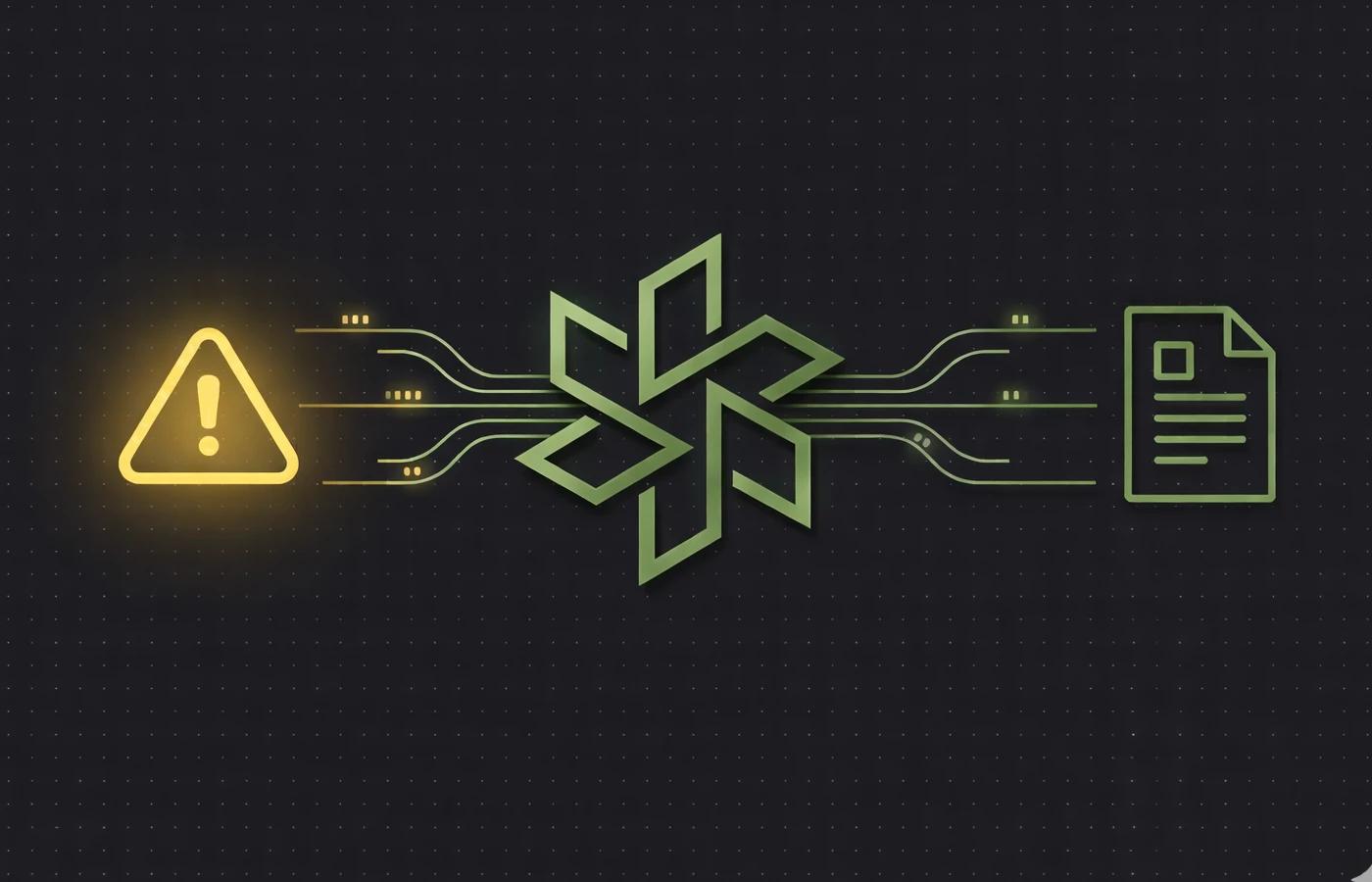
Click to watch OpenSRE investigate an incident in 60 seconds
Website · Docs · Live Demo · Contributing
Why OpenSRE?
| Learns from every incident | OpenSRE remembers past investigations — what worked, what didn't. Similar incident at 3am? It already knows the playbook. |
| Understands your infrastructure | Neo4j knowledge graph maps service dependencies, so the agent knows blast radius before it starts investigating. |
| Plugs into what you already use | 51 production skills for Datadog, Grafana, PagerDuty, Elasticsearch, Kubernetes, AWS, and more. No rip-and-replace. |
Quick Start
git clone https://github.com/swapnildahiphale/OpenSRE.git
cd OpenSRE
cp .env.example .env
# Add your ANTHROPIC_API_KEY to .env (OpenRouter via the optional LiteLLM proxy)
make dev
This starts Postgres, config-service, Neo4j, sre-agent, and the web console. Migrations run automatically. Open http://localhost:3002 and paste the admin token shown in the terminal to sign in. (LiteLLM is an optional --profile litellm add-on.)
Architecture
Features
| Feature | Description |
|---|---|
| 51 Production Skills | Elasticsearch, Datadog, Grafana, PagerDuty, K8s, AWS, Jenkins, Argo CD, and more |
| Long-term Memory | Neo4j episodic memory — surfaces past solutions mid-investigation via memory-search |
| Knowledge Graph | Neo4j service topology, dependency traversal, blast radius |
| Multi-provider LLM | Direct Anthropic by default; optional LiteLLM for OpenAI, Gemini, and more |
| Web Console | Investigations, memory hub, config editor |
| Slack Integration | Investigate incidents directly from Slack (make dev-slack) |
| Teams Bot | Investigate incidents from Microsoft Teams (make dev-teams) |
Useful Commands
| Command | What it does |
|---|---|
make dev | Start all services (Postgres, config, Neo4j, agent, web UI) |
make dev-slack | Start all services + Slack bot |
make dev-teams | Start all services + Microsoft Teams bot |
make stop | Stop all services |
make status | Show service health status |
make logs | Follow all service logs |
make logs-agent | Follow sre-agent logs only |
make clean | Remove containers, volumes, and images |
Slack integration
Create a Slack app, add SLACK_BOT_TOKEN and SLACK_APP_TOKEN to .env, and run make dev-slack. Full guide.
Microsoft Teams
Configure TEAMS_APP_ID, TEAMS_APP_PASSWORD, and TEAMS_TENANT_ID in .env, then run make dev-teams. The bot listens on port 3978. See teams-bot/README.md.
E2E Testing with EKS
Run OpenSRE against a real Kubernetes cluster with the OpenTelemetry Demo app to test end-to-end investigations.
Prerequisites
- An existing EKS cluster with
kubectlandhelminstalled - AWS CLI configured with access to the cluster
Setup
export EKS_CLUSTER=my-cluster
export EKS_REGION=us-west-2
make e2e-setup-eks
This installs the otel-demo app on your EKS cluster, sets up port-forward tunnels to Prometheus/Grafana/Jaeger, starts sre-agent and the web UI, and generates a team token you can use to sign in.
Run fault injection tests
make e2e-test                    # Quick cart failure investigation (raw curl)
make e2e-test-cart               # Cart service fault — ~10% EmptyCart failures
make e2e-test-product            # Product catalog fault — ~5% GetProduct failures
make e2e-test-recommendation     # Recommendation service cache failure
make e2e-test-ad                 # Ad service failure — all requests fail
make e2e-test-all                # Run all 4 fault injection tests sequentially
Each test injects a fault into the otel-demo app via feature flags, then triggers an OpenSRE investigation to diagnose it.
EKS commands
| Command | What it does |
|---|---|
make e2e-setup-eks | Full setup: otel-demo on EKS + tunnels + agent + token |
make e2e-teardown-eks | Uninstall otel-demo from EKS and stop tunnels |
make e2e-status | Show cluster, pods, and observability status |
make e2e-token | Generate a team token for web UI access |
make eks-port-forward | Start port-forward tunnels to EKS |
make eks-port-forward-stop | Stop port-forward tunnels |
Local cluster (Kind)
For testing without a cloud cluster, you can use Kind instead:
make e2e-setup       # Create Kind cluster + install otel-demo + start agent
make e2e-teardown    # Delete Kind cluster and clean up
Comparing OpenSRE
OpenSRE — the memory-first AI SRE at opensre.in is not affiliated with Tracer’s OpenSRE at opensre.com.
- OpenSRE vs Tracer OpenSRE — team platform with episodic memory & knowledge graph
- vs commercial tools — PagerDuty AI, Rootly AI, Shoreline
- Blog: commercial comparison
Built With
OpenSRE is built on top of proven open-source technologies:
- Claude Agent SDK — Agent orchestration (root investigator → specialist subagents)
- Neo4j — Knowledge graph for service topology and dependency traversal
- FastAPI — Backend API with SSE streaming
- Next.js — Web console (dashboard, memory browser, config editor)
- LiteLLM — Optional multi-provider LLM proxy
- PostgreSQL — Config and agent-run storage (episodes live in Neo4j)
Star History
Contributing
We welcome contributions! See CONTRIBUTING.md for guidelines. Please open an issue before starting major work.
Creator
|
Swapnil Dahiphale · SRE · Builder "Built by someone who's been paged at 3am." |


|
License
OpenSRE is licensed under the Apache License 2.0.